The AI theme reaching ever more impressive heights after the US-Iran deal prompted me to read about the dotcom bubble, to extract some parallels and insights for our present circumstances.
Comparing the Internet and AI themes/bubbles is natural because both are revolutionary technologies with world-changing potential, drawing in massive amounts of capital and interest. I have read parallels drawn for this and that factor, but this piece aims to summarize several of them into a coherent picture. The coincidences are obviously plenty, but there are also several (very relevant) differences.
In terms of investment, I think the defining factor in both cases is the shift in investor focus (and returns) from economics and valuation into technology, product competition, and market potential (aka ‘buy accelerating toplines’). This shift of focus eventually reverts, leading to a burst of the bubble.
In that sense, the eventual outcome of this new capital cycle is ‘easy’ to predict: massive societal transformations spurring wealth and prosperity, made possible by an enormous waste of capital and the ruin of many investors. I am pretty sure that AI as an investment theme is a bubble, that it will one day burst, and that it will leave a lot of people severely bruised financially. What’s harder to predict and a cautionary tell for the bears is when the bubble will burst and the heights it will reach before that happens.
Ready when you are
Disclaimer: The opinions expressed in the Blog are for general informational purposes only and are not intended to provide specific advice or recommendations for any individual or on any specific security or investment product. I may own or later purchase some of the stocks mentioned in this article.
A tech bubble
AI is a special sort of bubble, a tech bubble. A tech bubble is different from other bubbles because, at the center of it, lies a new technology that represents a step change in productive capacity, demanding massive capital outlays that generate incredible value for society. It is similar to other bubbles in that capital investment departs from sound principles for determining future returns, like valuation or market analysis, in favor of speculation and mania.
A revolutionary discovery generating massive wealth
At the heart of a tech bubble, there is a technology or discovery with massive transformative potential for society or an industry, allowing the application of capital for the expansion of production in novel ways.
Some examples of tech bubbles are the railroad mania, the dotcom bubble, and smaller bubbles in telegraphs, cars, radio, TV, space, IT, hydrocarbon fracking, etc.
More generally, we could speak of discovery or ‘new market’ bubbles. For example, the South Sea and Mississippi bubbles in the 1700s (new land in North America), the emerging market bubbles of the early 2000s (China carries these markets into massive middle class expansion), or, closer to home, the recurrent Argentina bubbles (Argentina is now investable!).
Technology and discovery bubbles are different from regular asset bubbles like the tulip mania, the Japanese bubble, a localized real estate bubble, or NFTs, in that capital actually goes to some productive use, and not simply to flipping previously existing assets.
Tech bubbles are also way more dangerous for investors because they have a fundamental backing that provides an alibi for speculation. They are incredibly positive for society because they direct massive amounts of capital to socially valuable infrastructure layouts at negative capital returns.
Specifically for AI, at this point, the fact that it represents a technology revolution is undeniable. Back in 2022/23, skepticism was tenable, but not anymore.
Nothing will ever be the same, hence the bubble
When such a technology revolution arises, a natural reaction is for people to think that ‘nothing will ever be the same’. The technology will so profoundly modify previous market and society structures that existing frameworks have very little value.
In our time, this belief is represented by the Singularity, ASI, post-scarcity, and similar concepts.
‘Nothing will ever be the same’ is the core belief sustaining the bubble because it allows market participants to ignore the rules of economics. If everything will be transformed, then new rules and metrics have to be created to measure these new ventures.
Further, this lack of pre-established rules and the prospect of an uncharted future also generate fear in people (FOMO). In our case, this is perfectly encapsulated in the ‘permanent underclass’.
Everything is always the same, hence the burst
Unfortunately, technologies have never so far escaped the rules of economics, the most important of which is competition and its effects on capital returns: capital without a moat cannot earn a good return and deserves a low valuation, regardless of where the capital is applied.
The result has been that these technologies generate incredible wealth for human societies but end up being terrible uses for capital.
AI might finally be THE technology that changes all society beyond recognition forever, but so far, the tally is very lopsided against it.
To visualize this, and temporarily suspend the ‘nothing will be the same’ mentality, it pays to position oneself in the shoes of people contemplating all previous tech bubbles. Wouldn’t those technologies seem just as incredible back in the day?
Complete NEW WORLDS being open for business.
Someone used to horses and carts moving at maybe 20 miles per day watching a train go by at 45 miles per hour
Someone receiving a telegraph message from another continent, or hearing a telephone voice or a radio message, or a moving image, for the first time.
Someone watching a car, or a plane or a space rocket.
Comparison with the dotcom bubble
Analyzing the dotcom bubble specifically is even more useful because of its closeness to our current circumstances: it had its epicenter in the US, it was an IT technology revolution, and market and media structures were closer to the present. It is a much more comparable scenario than the South Sea bubble or the railroad mania.
Although the AI bubble is the best available analogy, it is not perfect. It is maybe among the dissimilarities that we may find more analytical value.
Similarity: Moat(less) application-layer business models
The big question that the bubble cannot answer is how a company in the most downstream segment of the technology revolution captures value. This is not only about the value the application creates, but why it cannot be appropriated by its consumers, suppliers, and competitors. Without value capture, there is no way to sustainably finance the capital outlay that feeds the bubble upstream.
In the internet age, the most downstream businesses were the webpages serving consumers and businesses. Some made a little money; most made none. It was only years after the bubble burst that internet businesses with a moat emerged (Google, Meta, potentially Uber and some SaaS).
We are in the same situation today, with AI labs losing money and not being able to answer how they can eventually protect the fruits of their efforts. Not to mention the AI-wrapper applications that are one step downstream.
Similarity: Scale as economics solver drives capital investment
The question of profitability and moat is (and was) deferred to scale.
During the dotcom period, people thought that, given enough users or market share, internet businesses would be able to generate a good margin on their services on a massive market.
The priority was to grow and reach that final destination before others did, because otherwise, the possibility to create that moat would be gone. Today, the belief is broadly similar, with the commentary from the hyperscalers being on the line of ‘we need to win this race or else…’.
This drives a massive expenditure of capital to secure those positions. In the dotcom era, capital went primarily to advertising, web development, and networking equipment. Today, it goes either to data centers (and their supply chains) or to proprietary model providers.
Difference: Public vs private market financing
A big difference between the two bubbles is where capital came from to sustain the unprofitable downstream businesses.
During the dotcom bubble, public markets led the financing via IPOs and follow-on offers. Dozens of unprofitable application (website) businesses went public every year, and they kept selling stock when they needed capital. Upstream from public markets, VCs and private capital financed the early stages of these companies, but the road to public trading was very fast.
Today, most of the boom is financed with private capital, either from VCs or from the hyperscalers’ FCF from other businesses.
Does this make the financing more sustainable? Potentially, if private markets are willing to have a longer time horizon than public ones. However, private capital is finite if the investments cannot reproduce a return eventually. Also, private markets probably reflect the sentiment indicators of public markets via the AI-themed stocks.
Similarity: Picks and shovels bubbles
The massive capital outlays of the downstream businesses generate a boom in revenue and earnings in upstream businesses.
Today, the most relevant stocks of the AI theme are primarily upstream of the final consumer (picks and shovels). This includes cloud providers, neoclouds, semiconductors, electronics, and electric component manufacturers, etc.
In the 2000s, there were more public application stocks than today, but picks and shovels were also popular bubble names. The most salient example was Cisco (networking equipment).
At the time, these names were seen as safer and more fundamentally sound investments because they had growing earnings and a technical moat. However, the businesses shrank dramatically once the bubble burst because their revenues were generated by capital going into internet companies, and not by recurring cash flows from internet companies.
The challenge with the picks & shovels in AI is that they depend on the application model moat question eventually being solved, i.e., how do companies make money selling AI, so that they then invest in training and serving AI. Insofar as that is not solved, they are simply a bubble upstream of another bubble.
Similarity: A productivity boom
The massive capital expenditures needed to lay down the infrastructure for the technological revolution generate a boom in the economy that increases the productivity of workers.
This is originally read as a sign that the revolution is effectively ushering in a new era of prosperity. Unfortunately, this is not driven by higher productive capacity but rather by a cyclically hot investment demand period.
In the case of the dotcom bubble, the US economy grew strongly into the late 1990s, in big part driven by CAPEX (telecom networks) and other investments coming from internet businesses (advertising, R&D). The wealth effect generated by the bubble also contributed to a healthier consumer economy. All of this reverted drastically after the bubble burst in March of 2000.
Today, a large part of the US’ GDP growth comes directly from AI CAPEX. This is without considering the myriad wealth effects caused by soaring stock prices and by a supply-chain-wide productive boom, which end up spilling to other sectors of the economy.
Similarity: New research and media (buy accelerating top-lines)
If the technology revolution will render all previous structures and rules useless, then a new form of valuation and research has to emerge. The main characteristic of the new research landscape is that profits and capital returns are replaced by technical proficiency and by momentum/positioning, as determinants of stock performance.
This is really well captured in the meme ‘buy accelerating toplines’.
Additionally, new rules require new analysts and channels, leading to a shift of attention towards the people closer to the technology.
During the dotcom bubble, dozens of publications were spawned to talk about the Internet space and the stocks involved. Some bank analysts and media figures, like Mary Meeker or Jim Cramer, became incredibly famous and revered. It was also at this time that CNBC (a live financial news network) was created.
Today, we have several AI-specialized publications (SemiAnalysis), plus new live media outlets commenting on the markets (MTS).
Similarity: Reinforcing buy-the-dip events
This is maybe one of the least remembered parts of the dotcom bubble, but it had massive drawdowns, and all of them were followed by even more impressive rallies:
Between June and July 1996, the Nasdaq fell almost 20%, only to then rally 65% over the next six months
In early 1997, another 15/20% correction, followed by a 50% rally over four months
July to October 1998 (LTCM collapse), 30% drawdown in two months, then the FED cuts rates and the Nasdaq rallies 100% in four months and then almost uninterrupted to almost 350% into the peak in March 2000.
January of 2000, 15% drop in one week, followed by a 50% rally into the peak over two months.
Each of these, plus a myriad other smaller drawdowns, generated in investors a very strong idea that they should buy-the-dip. Each positive BTD experience invigorates the bulls and leads to more consensus about the inevitability of the revolution.
In our own times, there have been a few important BTD events since the AI trend started in late 2022:
12% drop between July and November 2023 because of higher rates, followed by a 40% rally over four months.
25% drop in less than a month in July/August 2024 because of recession fears, followed by a 30% rally over four months.
25% drawdown between February and mid-April 2025 caused by the combination of the ‘Deep Seek moment’ with Liberation Day, followed by a 60% rally over the next seven months
15% drop between late February and early April of 2026 with the Iran War, followed by a vertical rally of 35% in two months
The recent 12% drop over two months finishing with the Situational Awareness liquidation, followed by a 10% gain in a week.
Difference: The deflationary nature of the technology
An unsolved question of this technology revolution, compared with the Internet or previous revolutions, is whether it is fully deflationary or if it also creates new markets (creative destruction). This is a relevant question for the eventual capture of value.
During the dotcom bubble, the Internet was clearly creating a lot more than it was destroying. Some business models replace others (say ecommerce versus B&M retail or email vs traditional mail), but a lot of stuff was simply impossible before (content economy, livestream communication, networked systems, etc.).
In the case of AI, I would currently settle for just fully deflationary, but this might be a question of time frame. So far (emphasis in so far), it seems that AI allows us to do more with less (specially less people), which is naturally deflationary, given that the same is being produced, and fewer people are needed.
Today, I don’t think there is a clear narrative of where AI is creating novel forms of demand, needs, and wants to be met that will require people or resources. In fact, the whole narrative, even the bullish AI one, recognizes that AI will be a huge hit against aggregate demand. This is another long-term bearish factor on AI downstream businesses being able to capture value to sustainably finance the capital expenditures.
Difference: The interest rate environment
Interest rates during the dotcom bubble were broadly similar to today’s in absolute level, but not in relative level, especially compared to their precedent history and to the inflationary environment.
The Fed maintained a relatively stable rate during most of the dotcom bubble, and although it was higher than today in both nominal and real terms, it was considered fairly accommodative because the US came from high single-digit rates in the late 1980s.
At the time, many called for rate hikes to rein in the bubble, but Fed Chairman Greenspan believed that the productivity boom from computers and the internet allowed for higher growth in GDP and stock prices than was previously considered healthy. Further, inflation had not increased or become a problem.
In 1998, the Fed cut rates rapidly to stave off the crisis caused by the LTCM collapse, and coincidentally, then the frenziest portion of the bubble began. Then, in 1999, the narrative reversed, and rate hikes were seen as necessary to deflate the bubble (and a moderate spike in inflation).
Today, inflation has definitely been more volatile, and there are inflationary pressures besides the bubble itself, like the Iran War, the global supply chain decoupling, the twin deficits, and the debasement/dedollarization trends. In this respect, one could say that rates have been more accommodative than during the dotcom bubble, and have less leeway to fall further.
This is a key difference because the most frenzied part of the dotcom bubble started after the Fed cut rates because of the LTCM collapse. Also, although the bubble ended almost a year after the first hike, the hikes are still seen as a determining factor in bursting the bubble. Today, the environment seems to point towards higher (i.e. bubble bursting) rather than lower (i.e. bubble inflating) rates.
Difference: US greatness narrative
Because the bubble is so concerned with sentiment, the spirit of the time is a key factor that cannot be ignored. In this respect, the AI and Internet bubbles differ quite a lot.
Besides the early 1900s, or the 1940s and 1950s, there was probably no other time like the 1990s to be proud of the American system. The country had defeated Soviet communism; Asian communism had embraced markets; the US had been an easy victor in the Gulf War; Japan, the erstwhile competitor, had slumped into a deep crisis; the US was the undisputed leader of Internet technologies; and as the boom advanced, the US reached fiscal surpluses.
Today things are different: China is a technological competitor who, if not at par, is close behind in AI and ahead in other areas; the world faces two major wars, one in which the US is a direct participant and which is not being won easily like the Gulf War; the country is much more divided; and deficits are large.
Whereas in the 1990s the Internet revolution was probably read as the natural result of the superiority of the American system, today AI might be seen only as an opportunity for America to cement its (not so sturdy) lead.
There is a lot more that could go wrong (inflation, rates, war, China winning the race, the US electing left-leaning politicians during the Midterms) and derail the focus on AI.
Conclusion: the ingredients for the bubble, but not for the mania?
The dotcom bubble can be classified into two phases:
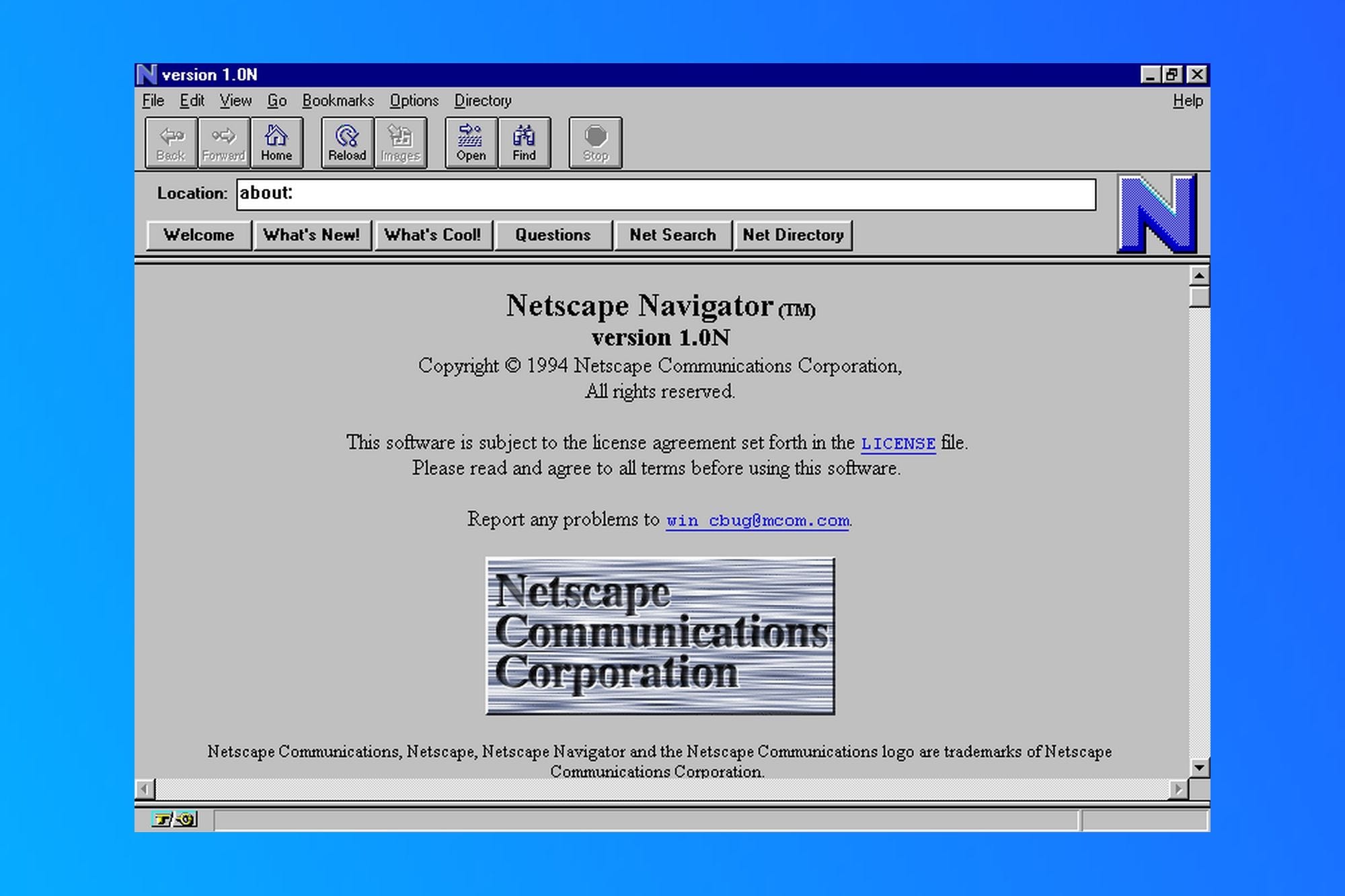
The bubble: between the IPO of Netscape (August 1995), considered the start of the market realization that the Internet was a revolutionary technology and an investment theme, and the collapse of LTCM (July to October 1998). Four years during which the Nasdaq climbed 300%.
The mania: after rates were lowered to stave off the LTCM collapse, the bubble became a mania, climbing 350% in little more than a year into the peak.
In the case of AI, it seems that we have already seen at least part of the bubble phase, with the Nasdaq up 200% over 3.5 years between late 2022 (ChatGPT launch) and the beginning of the Situational Awareness collapse in June 2026.
The question remains whether we have seen it all, and especially if we will see the mania phase. In this sense, the technology, media, focus, and other bubble mechanisms are present, but some sentiment factors are clearly missing or even working against the bubble becoming a mania:
Whether AI can help the economy grow beyond the CAPEX investment, and remove the sentiment of exhaustion, stagnation, etc, which is part and parcel of all modern societies, especially among the young. Without it, and if AI is only deflationary (particularly labor deflationary), then the political conflict question becomes a huge deal. This will probably play out during the Midterms already.
Whether there is space for rates to be cut and fuel asset price speculation and to provide financing for the CAPEX investments. The combination of the war(s), decoupling, deficits, etc. does not seem indicative of that. However, we may see an inflationary low real-rate environment.
Whether other conflicts will emerge, particularly in war, hegemony, fiscal, or politics, putting in question more fundamental factors of the whole economy/finance edifice.